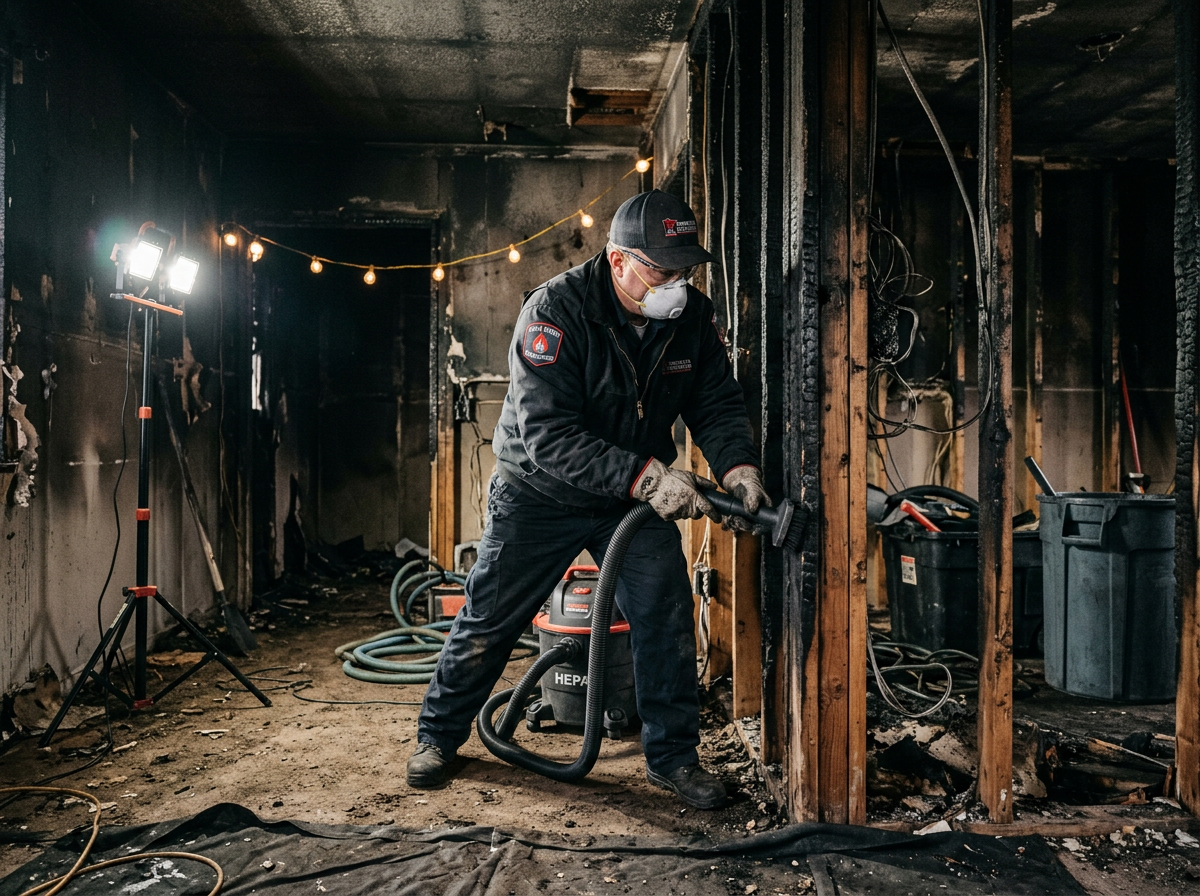
Minnesota structure fires bring immediate Category 3 water from suppression that soaks finished basements and wall cavities. When temperatures sit below freezing, that water turns to ice inside framing and under flooring before extraction crews arrive. Crews must thaw and extract in controlled stages to avoid pushing meltwater deeper into Osseo’s older stock with full-height finished spaces.
Soot from synthetic furnishings travels through HVAC and settles on every porous surface. In homes with forced-air systems common across Hennepin County, that residue re-circulates during drying if ducts are not isolated early. Technicians map moisture with meters rather than visual checks because ice hidden behind drywall will re-wet materials days later if missed.
Board-up and tarping must account for wind-driven snow that enters through roof breaches during March calls. Once suppression water is removed, remaining smoke odor lingers in insulation and carpet padding that cannot be salvaged. Homeowners who run portable heaters without extraction spread soot further and increase the scope of cleaning required.
Suppression Water and Winter Freeze
Suppression water extraction follows the same order as any Category 3 loss: remove standing water first, then address saturated materials against frozen exterior soil. In Osseo, lines that freeze overnight require repeated visits because meltwater reappears once interior heat is restored.
Technician insight
In Osseo, the thing that catches most people out with Fire Damage Restoration is how fast suppression water freezes inside finished basement walls during a January fire; once that ice melts it soaks the same clay soils that already hold water against foundations, turning a one-day extraction into repeated visits.
January kitchen fire in Osseo split-level
Suppression water ran into the finished lower level and froze overnight. Meters showed ice behind drywall on two walls. Crews thawed and extracted in sections, removed saturated carpet and pad, then dried the cavities over five days while exterior temperatures stayed below zero.
Fire Damage Restoration Services We Offer
✓Soot and Smoke Residue Cleaning
Removes acidic soot from hard surfaces and contents before it etches finishes in Twin Cities homes.
✓Suppression Water Extraction
Extracts water introduced during firefighting from basements and cavities before it migrates to finished areas.
✓Frozen Suppression Water Removal
Thaws and extracts ice formed from suppression water in wall cavities and under slabs during winter calls.
✓Odour Treatment
Neutralizes smoke odor trapped in insulation, ductwork, and porous materials common in Minnesota housing.
✓Board-Up and Tarping
Secures openings after fire to prevent snow and meltwater entry during Osseo winters.
How it works
- 1
Initial Assessment
Technicians inspect for hidden ice, soot migration paths, and structural compromise before any drying begins.
- 2
Water and Ice Removal
Standing water and frozen material are extracted in stages to protect foundation walls against saturated exterior soil.
- 3
Cleaning and Containment
Soot is cleaned from surfaces while HVAC is isolated to stop cross-contamination throughout the home.
- 4
Drying and Verification
Moisture mapping confirms cavities are dry before reconstruction, accounting for slow winter evaporation rates.
Pricing
Scope depends on the volume of suppression water, extent of frozen cavities, and soot migration into finished spaces; call for inspection and quote.