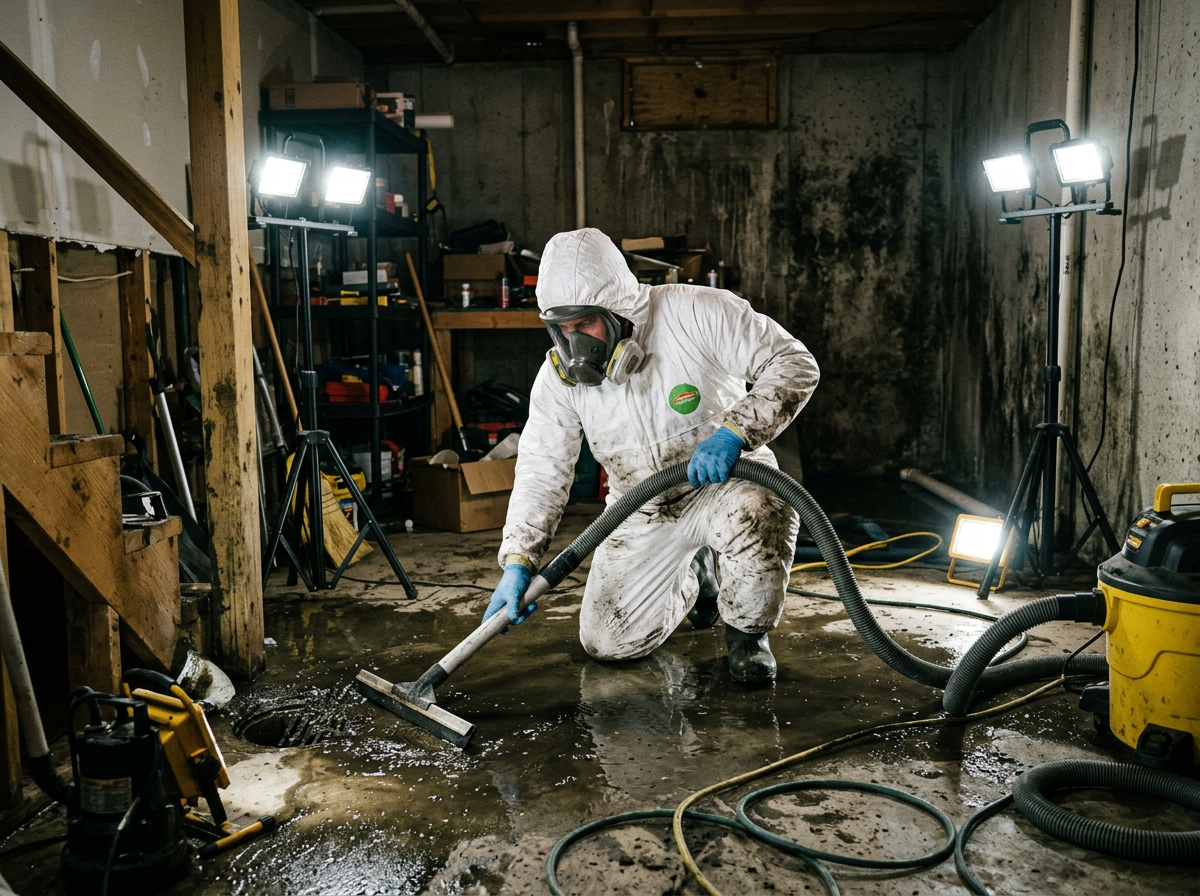
In older Minneapolis and Saint Paul neighborhoods, combined sewers surcharge during heavy spring rains or rapid snowmelt, pushing sewage upward through floor drains rather than allowing it to drain away. Finished basements with carpet, drywall, and cabinetry absorb this water immediately, and the porous materials hold contamination deep into the subfloor and wall cavities. Extraction must begin with full PPE and containment barriers because the water is Category 3 from the first moment it enters the space.
Technicians remove all saturated porous materials on contact, including carpet, pad, base trim, and lower sections of drywall, because these items cannot be salvaged once sewage has wicked into them. Non-porous surfaces such as concrete floors and sealed cabinets receive repeated antimicrobial applications followed by verification with moisture meters. Air movers and dehumidifiers run continuously afterward, but winter conditions limit ventilation options so drying times extend and negative air machines stay in place longer to control odors.
Jobs fail when homeowners attempt their own cleanup or when extraction skips hidden wall cavities created by ice-dam meltwater that later mixes with sewer flow. Backwater valves installed on the main line stop future surcharges from the street, yet many homes built before the 1980s lack them. Proper documentation of every removed item and the sequence of antimicrobial treatments protects the property owner when dealing with insurance adjusters who frequently question sewer claims.
Technician insight
In Osseo, the thing that catches most people out with Sewage Backup Cleanup is how quickly sewage from Minneapolis combined sewers travels through the sand-plain soils of Anoka County and reaches finished basements before homeowners notice the odor. The mistake we see repeatedly is attempting to save carpet or lower drywall after the water has already wicked upward; once that happens the only safe step is removal.
Osseo Basement After Spring Surcharge
Heavy March rain fell on still-frozen ground and overloaded the combined sewer main serving an older Osseo neighborhood. Sewage rose through the floor drain and spread across carpet and into the bottom eight inches of drywall. We established containment, extracted the water, removed all saturated materials, applied antimicrobials, and ran drying equipment until readings confirmed the slab and studs were dry.
Sewage Backup Cleanup Services We Offer
✓Category 3 Extraction and Disposal
Immediate removal of sewage-laden water and all contaminated solids from finished basements using sealed equipment and licensed waste transport.
✓Floor Drain Backups
Targeted response to combined sewer surcharges that push waste upward through floor drains in older Minneapolis and Saint Paul homes.
✓Disinfection and Antimicrobial Treatment
Application of EPA-registered antimicrobials to all remaining hard surfaces followed by moisture verification to confirm no hidden saturation remains.
✓Contaminated Material Removal
Selective demolition and disposal of carpet, drywall, insulation, and cabinetry that cannot be restored after sewage contact.
✓Backwater Valve Recommendation
Assessment and referral for backwater valve installation on the main sewer line to prevent repeat surcharges from street-level combined systems.
How it works
- 1
Site Assessment and Containment
Technicians arrive, establish containment zones, and document the extent of sewage migration through finished basement materials.
- 2
Extraction of Contaminated Water
Standing sewage is removed using truck-mounted extraction units while waste is contained for licensed disposal.
- 3
Removal of Affected Materials
All porous items that contacted Category 3 water are cut out and bagged for proper transport and disposal.
- 4
Disinfection and Drying
Hard surfaces receive antimicrobial treatment, then drying equipment runs until moisture readings return to normal.
Pricing
Scope and cost are determined only after an on-site inspection of the affected basement and sewer line. Call to schedule the assessment.