2026-09-13 ·
Flooded Basement Cleanup After Spring Snow Melt in Osseo
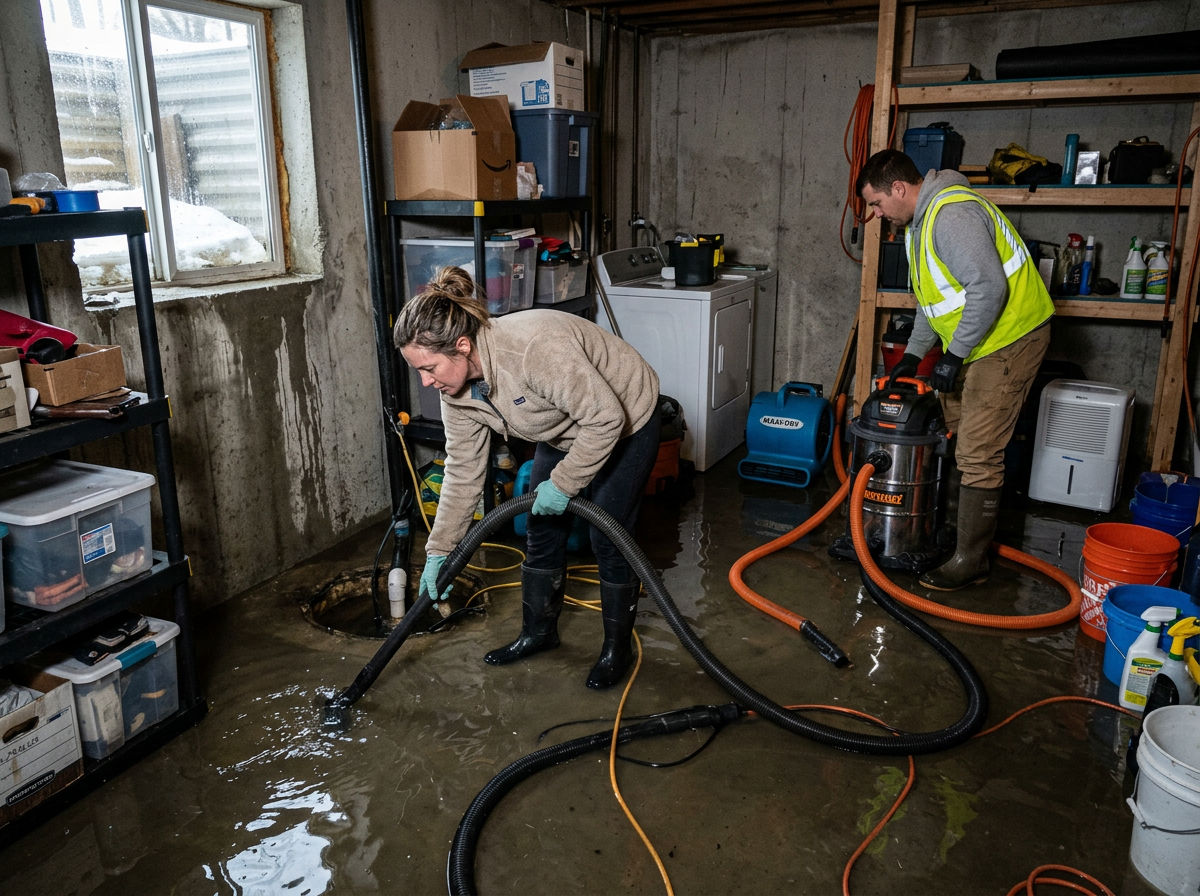
Flooded basement cleanup after spring snow melt in Osseo starts with removing standing water within the first 24 to 48 hours while ground remains frozen at 42 to 60 inches deep. Meltwater runs over the surface instead of soaking in, and finished basements throughout the area turn every low point into a collection zone. Ice dams on roofs and frozen sump discharge lines add sudden inflows that can carry sediment or push sewage through floor drains in older combined-sewer neighborhoods.
Assessing Meltwater Sources in Osseo
Osseo sits near the Anoka sand plain and areas of Wright County clay, so water tables rise quickly once surface melt begins. Homeowners should check for backwater valves that may have failed and look for signs of seepage along foundation walls where frost heave has opened small gaps. Ice dams along eaves often release water that travels behind siding and enters at sill plates, creating hidden pockets that standard visual checks miss. Document every wet area with photos before any removal begins so later drying crews know exactly which zones received the most water. This assessment phase also reveals whether the water stayed clean or picked up contaminants from street runoff or sewer lines.
Water Extraction and Initial Containment
Once the source assessment is complete, extraction equipment pulls bulk water from the slab and any finished areas before it migrates into wall cavities. Submersible pumps handle deeper pools while wet vacuums manage the thin layers left on concrete. In homes with finished basements, baseboards and lower sections of drywall are often removed at this stage so moisture does not wick upward. Crews place air movers immediately after extraction to begin airflow across wet surfaces even while outdoor temperatures stay near freezing. The goal is to drop surface moisture quickly so the water does not remain in category 3 territory for more than a few hours.
Drying Challenges During Cold Minnesota Months
Winter and early spring drying takes longer because outdoor air cannot be used for ventilation without introducing more moisture or freezing interior surfaces. Dehumidifiers must run continuously to pull vapor from the air while maintaining indoor relative humidity below 50 percent. Technicians monitor moisture meters in joists, subfloors, and lower wall framing daily because hidden pockets behind insulation can stay wet for weeks when temperatures stay below 50 degrees. In Osseo homes built on clay soils, capillary rise from the slab can re-wet surfaces overnight, requiring repeated extraction passes. Proper drying often extends to 7 to 14 days rather than the shorter timelines possible in summer.
Preventing Mold After Incomplete Drying
Any moisture left behind after the initial cleanup can support mold growth within 48 hours once temperatures rise. Homeowners should schedule follow-up moisture checks at least three days after equipment is removed, especially in carpet padding and behind cabinets. For detailed guidance on avoiding mold after incomplete drying in flooded Osseo basements, review the steps outlined in our related article. Consistent humidity control and physical removal of saturated materials remain the most reliable defenses in Minnesota basements.
Professional Support for Osseo Properties
Twin Cities Flood Response operates from 101 Broadway St W #114, Osseo, MN 55369 and provides flooded basement cleanup and basement water removal tailored to local frost and sewer conditions. When the water carries sewage or when drying extends beyond what portable equipment can manage, sewage backup cleanup specialists coordinate with your insurance carrier to determine coverage based on the specific policy. Additional details on handling debris and contents appear in the article about removing mud and debris after a flooded basement cleanup in Minnesota.