2026-09-13 ·
How to Shut Off Water and Start Drying a Flooded Osseo Basement
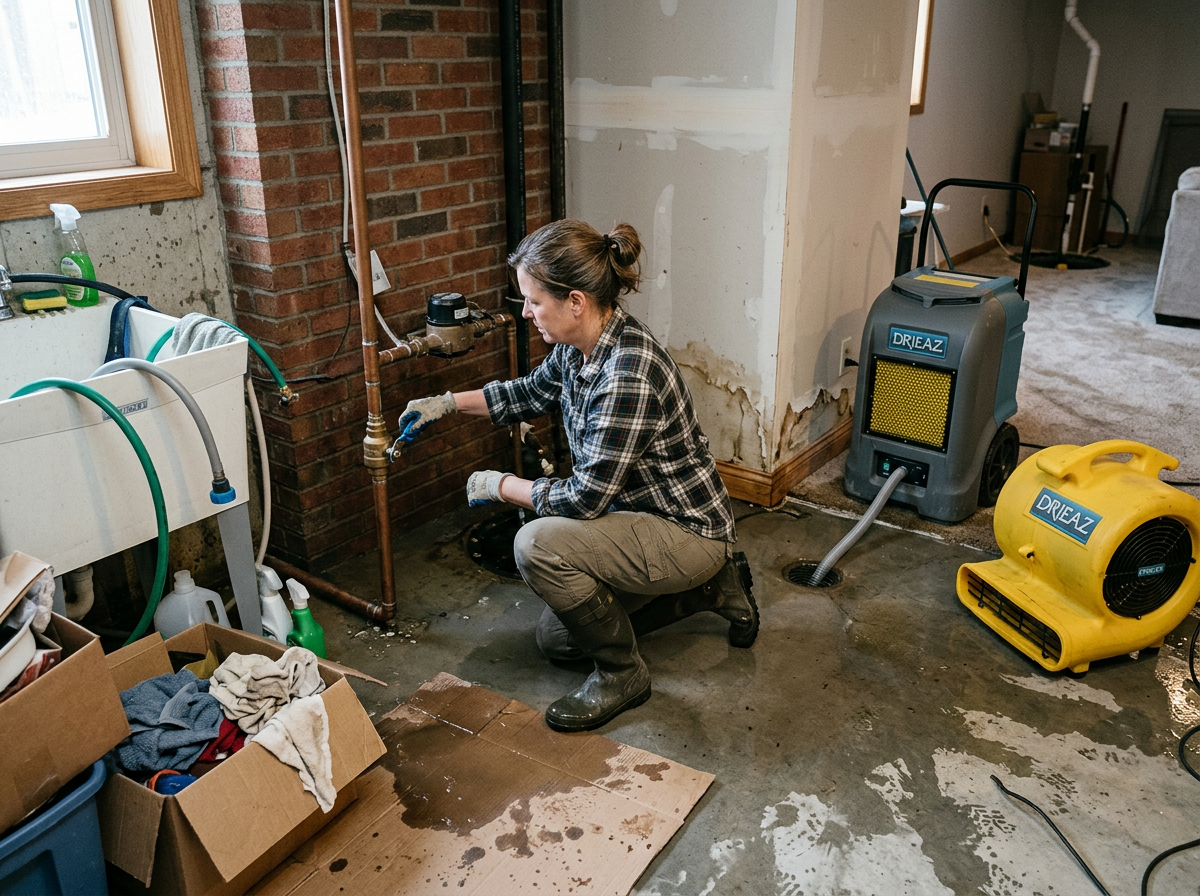
To shut off water in a flooded Osseo basement, first locate the main valve near the water meter, usually at the front of the house or in a utility area, and turn it clockwise until it stops. Once the flow is stopped, focus on removing standing water within the first 24 to 48 hours to reduce the chance of category changes, then set up air movers and dehumidifiers to reach humidity targets below 60 percent while maintaining indoor temperatures near 70 degrees. These initial actions address common Minnesota issues such as spring meltwater over frozen ground and combined sewer backups that push sewage through floor drains.
Locating and Operating the Main Shutoff Valve
Finding the main water valve requires checking near the water meter, often in a basement corner or utility room in Osseo homes. Turn the valve clockwise to stop the supply and prevent additional water from entering through supply lines. In older properties with finished basements, the valve may sit behind drywall access panels, so inspect carefully before water levels rise further. After shutting off the supply, open faucets on upper floors to drain remaining pressure from pipes. This step limits the volume of water that could mix with Anoka sand plain or Wright County clay soils already saturated from seasonal melt.
Managing Winter-Specific Challenges
Minnesota frost depths of 42 to 60 inches often freeze sump discharge lines and create ice dams that force water back into basements. Check the discharge line for ice blockages by inspecting the exterior outlet and using gentle heat if needed to restore flow. Frozen conditions also slow natural drying because outdoor ventilation is limited, so rely on mechanical equipment rather than opening windows. When lake-belt water tables rise, hydrostatic pressure can push additional moisture through floor cracks even after the main supply is off.
Removing Standing Water
Once the supply is off, use a wet-dry vacuum or submersible pump to extract standing water down to the lowest practical level. Work in sections to avoid spreading contaminated water from combined sewer events common in the urban core. Wear waterproof boots and gloves because floor drains may carry sewage. After bulk removal, place fans to promote airflow across wet surfaces while avoiding direct contact with electrical outlets until power is confirmed safe. Continue this process until no visible puddles remain.
Starting the Drying Process
Set up dehumidifiers to pull moisture from the air and maintain levels below 60 percent relative humidity, with air movers positioned to create cross-ventilation across floors and walls. In winter, run equipment continuously because cold outdoor air holds less moisture and ventilation is impractical. Monitor progress daily with a moisture meter on concrete and wood surfaces, aiming for readings that match unaffected areas. Drying in Minnesota basements can extend several days longer than in warmer months due to reduced evaporation rates.
Monitoring Conditions and Next Steps
Track temperature and humidity every 12 hours, adjusting equipment to keep spaces around 70 degrees while avoiding overheating that could damage finishes. If sewage is present from backflow through floor drains, consider professional assessment for hidden contamination in finished spaces. Readers dealing with repeated issues may review Checking Sump Pumps Before Heavy Rain Hits Osseo for preventive measures. For larger jobs, Flooded Basement Cleanup and Basement Water Removal outline equipment and sequencing used locally. Follow up by checking your insurance policy details directly with your carrier, as coverage for sewer backup depends on the specific terms.