2026-09-13 ·
Handling Sewage Backup During Flooded Basement Cleanup in the Twin Cities
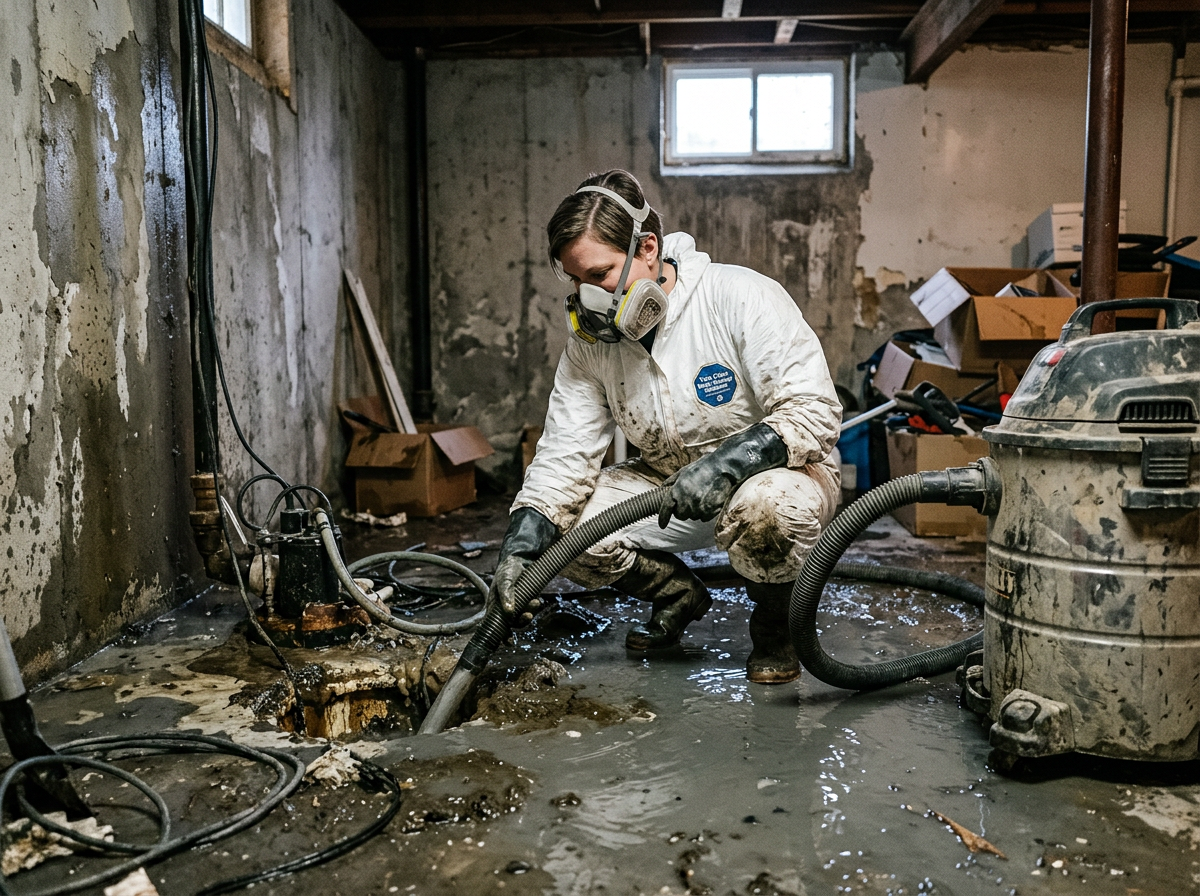
Sewage backup in a flooded basement cleanup across the Twin Cities typically starts with stopping the water source and isolating the area to limit exposure, followed by extraction within the first 24 to 48 hours before moisture levels shift categories. Minnesota basements often sit below 42-60 inch frost lines where spring meltwater sits on frozen ground and pushes into combined sewers, forcing effluent up floor drains. Homeowners in Osseo and nearby communities face added complications from ice dams and frozen sump lines that block normal outflow. Addressing the backup promptly reduces the chance of category 3 water spreading into finished living areas.
Recognizing Sewage Backup Indicators
Sewage backup shows up through dark, foul-smelling water rising from floor drains or low points rather than seeping through walls. In urban core neighborhoods with combined sewers, heavy spring rains or rapid snowmelt commonly trigger this flow because storm and sanitary lines share capacity. Finished basements throughout the Twin Cities hide the extent of contamination behind drywall or under carpet until odors or discoloration appear. Checking for backwater valves that failed or were never installed helps explain why water entered in the first place. Documenting visible water lines and affected materials early supports any later discussions with insurance carriers about policy terms.
Extraction and Initial Sanitation Steps
Extraction begins with removing standing water using submersible pumps and wet vacuums rated for contaminated liquid. Crews then apply EPA-registered disinfectants to all hard surfaces while discarding porous materials such as carpet pad and insulation that cannot be restored. In the Twin Cities, where many basements include finished rooms, technicians isolate HVAC returns to avoid circulating odors or particles. The address at 101 Broadway St W #114, Osseo, MN 55369 serves as the base for teams responding to these calls throughout the metro. Homeowners can review the full process on the sewage backup cleanup page for details on equipment and sequencing.
Winter Drying Challenges in Minnesota
Drying takes longer in winter because outdoor temperatures stay too low for ventilation and indoor humidity often climbs above 60 percent. With frost depths reaching 42-60 inches, groundwater remains high around the Anoka sand plain and Wright County clay soils, keeping moisture moving toward foundations. Technicians use air movers, dehumidifiers, and moisture meters to reach 40-50 percent relative humidity targets inside the structure. In Osseo and surrounding areas, this controlled approach prevents secondary mold growth in wall cavities that stay cold for weeks. See the flooded basement cleanup service page for equipment details suited to these conditions.
Reducing Future Backup Risks
Installing or inspecting backwater valves and maintaining sump discharge lines that remain clear of ice help limit repeat events. Regrading soil away from foundations, as outlined in the grading and drainage fixes around foundations in Osseo article, directs surface water before it reaches the basement. Homeowners should also review their insurance policies directly with carriers because sewer backup coverage varies and is often excluded without a specific rider. Keeping records of any work performed supports claims when needed, as described in the documenting damage for insurance after Osseo basement flooding post.