2026-09-13 ·
Salvaging Items After Flooded Basement Cleanup in Twin Cities Homes
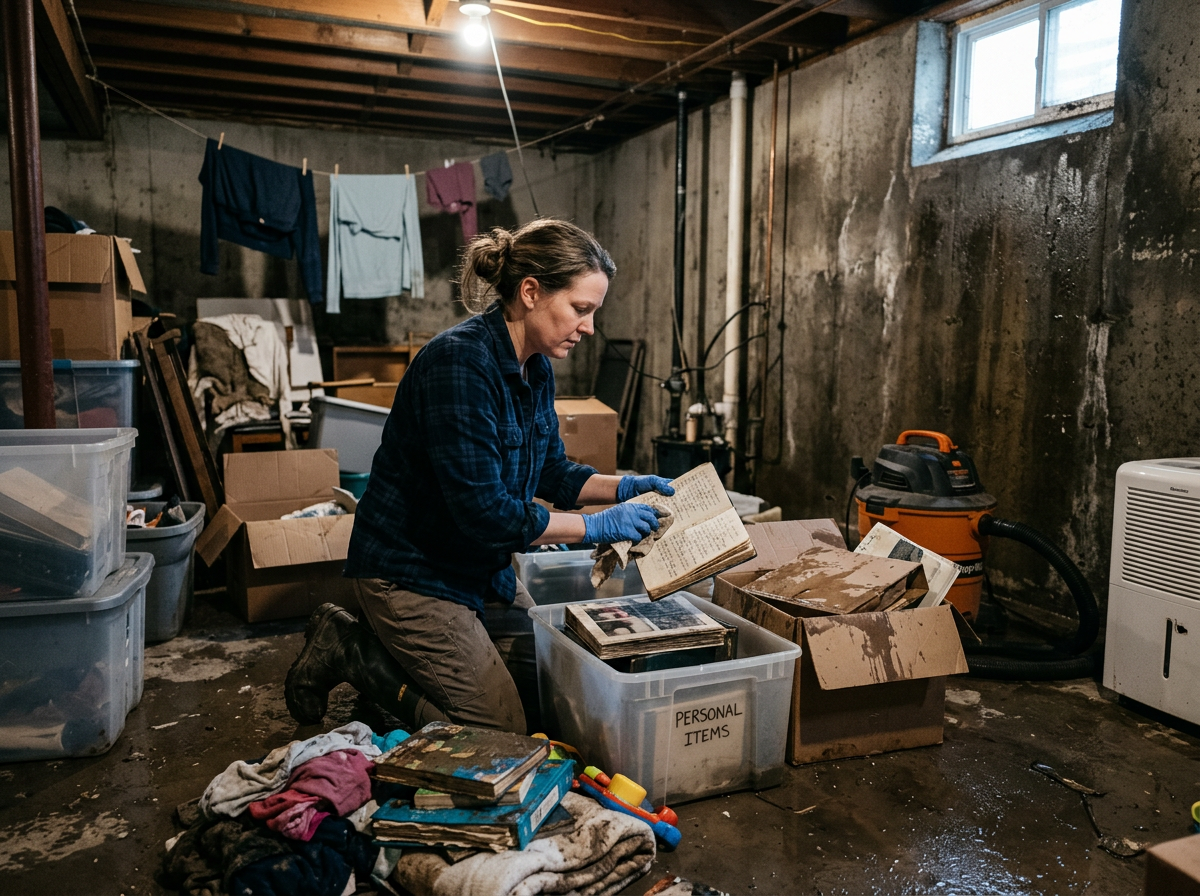
In Twin Cities homes, non-porous items such as sealed metal furniture or plastic containers can usually be salvaged after flooded basement cleanup when dried within 48 hours, while carpet, drywall, and upholstered pieces frequently need prompt removal to prevent mold in finished basements.
Assessing Damage by Material Type
Start by separating items based on how they absorb water. Hard surfaces like glass, ceramic, or sealed wood often recover when wiped and placed in a low-humidity space kept above 70 degrees. Fabric items and paper goods absorb quickly and require faster decisions. In Minnesota, where frost depth reaches 42-60 inches, spring meltwater can carry silt that embeds in fibers, reducing salvage odds for rugs and clothing. Check each piece for sewage traces from combined sewers common in the urban core; any odor or discoloration signals higher risk. Work in sections, tagging items as keep, dry further, or discard, so the process stays organized without rushing decisions that could spread moisture upward into living areas.
Drying Challenges During Winter Months
Winter conditions in the Twin Cities extend drying times because outdoor air stays too cold for ventilation. Homeowners often run dehumidifiers set to 45-50 percent relative humidity while maintaining indoor temperatures near 70 degrees to draw moisture from wood furniture and books. Frozen sump discharge lines or ice dams can allow water to linger, so check discharge points first. Place items on blocks to allow air circulation underneath, rotating them every few hours. Electronics need extra caution; remove batteries and open casings if safe, then set them in front of fans without direct heat that could warp components. This slower pace means monitoring moisture meters daily rather than expecting quick results seen in warmer months.
Salvaging Documents, Photos, and Textiles
Paper and photographs demand immediate attention because inks run and pages stick once water sits longer than a day. Freeze wet documents in sealed bags if full drying cannot start right away, then thaw and air-dry them between blotter sheets later. Textiles respond to gentle washing followed by line drying indoors with fans; avoid dryers until fully moisture-free to prevent shrinkage. In homes near the Anoka sand plain or Wright County clay areas, silt from lake-belt water tables can leave stains that require multiple rinses. Prioritize irreplaceable family records over replaceable linens. Keep a running list of what was moved and where it is stored so nothing is overlooked during the multi-day process.
Knowing When to Seek Additional Help
Some categories, such as drywall behind baseboards or carpet padding in finished basements, almost always require professional removal after flooded basement cleanup because hidden moisture leads to hidden mold. Flooded Basement Cleanup teams bring equipment sized for Minnesota winters when home dehumidifiers alone fall short. If sewage entered through floor drains, review the steps in How to Shut Off Water and Start Drying a Flooded Osseo Basement before handling items yourself. For insurance questions, follow the guidance in Documenting Damage for Insurance After Osseo Basement Flooding and contact your carrier directly, as coverage depends on the specific policy. Twin Cities Flood Response, based at 101 Broadway St W #114, Osseo, MN 55369, can advise on next steps without replacing the role of your adjuster.