2026-09-13 ·
What to Expect Day by Day During Professional Flooded Basement Cleanup
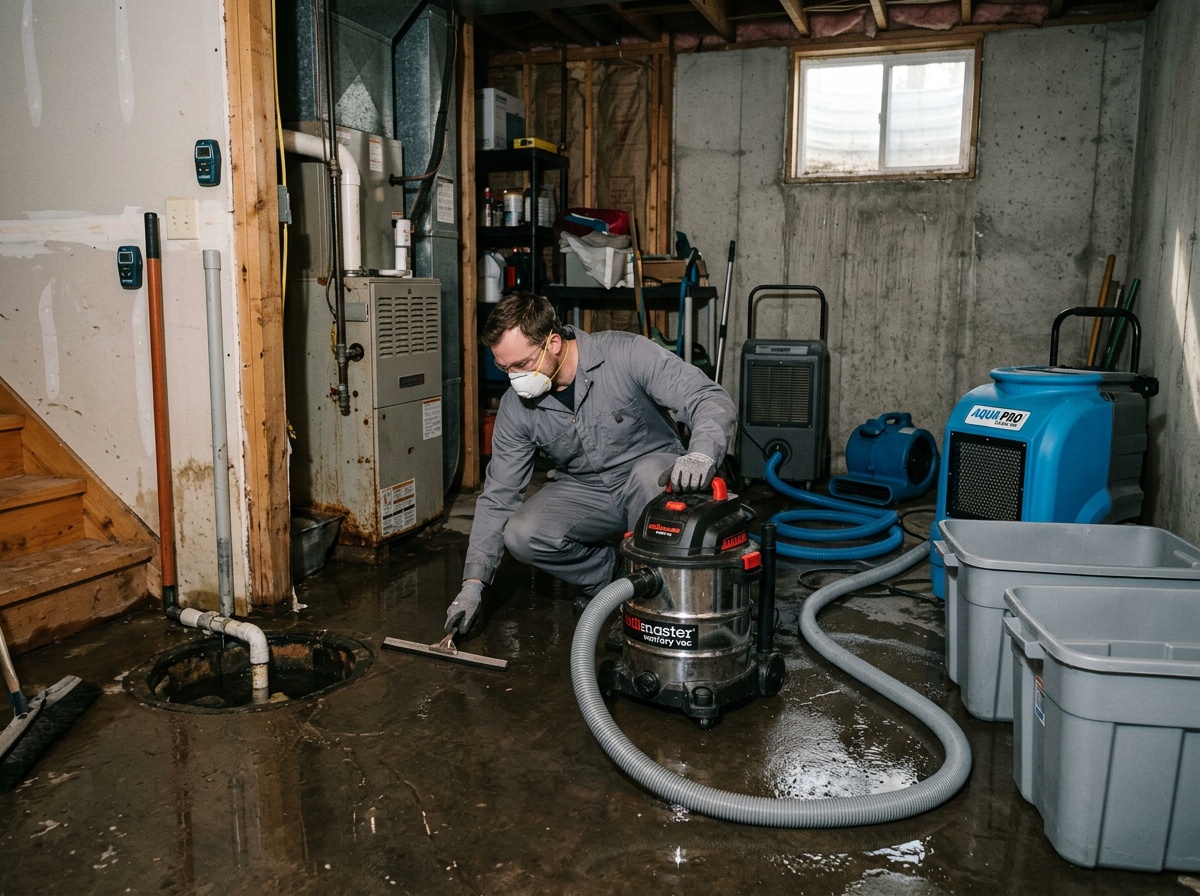
Professional flooded basement cleanup in Minnesota typically spans 5 to 10 days from initial extraction through final drying checks. The first 24 hours focus on removing standing water before it migrates into walls or subfloors, while the following days address moisture trapped in concrete and insulation amid 42-60 inch frost depths that limit natural drainage.
Day 1: Assessment, Extraction, and Containment
Technicians arrive at the Osseo address and evaluate water depth, source, and any sewage involvement from combined sewers common in the urban core. Extraction begins immediately with pumps and wands to pull water from the slab, targeting removal of the bulk volume before it sits long enough to raise category levels. Containment barriers go up around affected zones to prevent migration into finished living areas. Crews check sump discharge lines for freeze-ups and note any backwater valve performance. Homeowners receive guidance on shutting off water where safe, with a link to practical first steps at how to shut off water and start drying a flooded Osseo basement. Documentation photos start here for later reference.
Days 2-3: Equipment Setup and Initial Drying
Once bulk water is gone, air movers and dehumidifiers are positioned to create directed airflow across the slab and lower wall sections. In winter conditions, closed windows and frozen ground outside mean the equipment must run longer because ventilation is not an option. Humidity targets stay near 40-50 percent indoors while temperatures are maintained above 70 degrees where possible to speed evaporation. Technicians inspect for moisture behind baseboards and in carpet padding, removing materials that will not dry in place. On properties near the Anoka sand plain or Wright County clay soils, water tables can keep feeding moisture upward, so daily moisture meter readings track progress. Any mud or debris left after extraction is addressed with reference to removing mud and debris after a flooded basement cleanup in Minnesota.
Days 4-6: Monitoring, Adjustments, and Hidden Moisture Checks
Daily visits adjust equipment placement as moisture levels drop in the most exposed areas. Technicians probe deeper into insulation, subfloor seams, and behind finished walls common in Twin Cities basements. Ice dams or frozen discharge lines may require additional attention if meltwater re-enters during spring thaws. Readings continue until the slab and lower framing reach acceptable dry standards, often requiring 72-120 hours of continuous drying after extraction. If sewage was present, additional cleaning steps follow the initial drying phase. Progress notes help homeowners track what their policy may or may not address, directing questions to their carrier.
Days 7-10: Final Drying Verification and Site Restoration
Equipment is removed only after consistent meter readings confirm the structure is dry. Remaining surfaces receive cleaning to remove any residue from the original water event. For homes across the lake-belt region, final checks account for lingering high water tables that can slow complete drying. The process concludes with a walkthrough so homeowners understand what was done and what to watch for in future events. Full service details appear on the flooded basement cleanup page for those needing ongoing support in the Twin Cities area.